menu
LAST UPDATED
MAY 2025

URINFORM
Effortless health,
built into everyday life
Overview
UrInform is a speculative health product that explores how chronic condition monitoring can shift from occasional checkups to continuous, passive care.
By embedding data collection into an existing habit—using the bathroom—the product removes friction and makes health tracking more accessible for older adults.
Responsibilities
UX Research · Product Strategy · Concept Design · Accessibility · Visual Design
Background
UrInform explores how healthcare can shift from reactive check-ins to continuous, proactive monitoring. By embedding data collection into an existing habit—using the bathroom—the product removes friction from health tracking and makes it more accessible for older adults.
The Problem
Healthcare today relies on snapshots, not patterns
Chronic conditions require continuous monitoring, but current systems depend on infrequent doctor visits and one-off testing.
This leads to:
Delayed detection of issues
Inconsistent data
Reliance on patient compliance
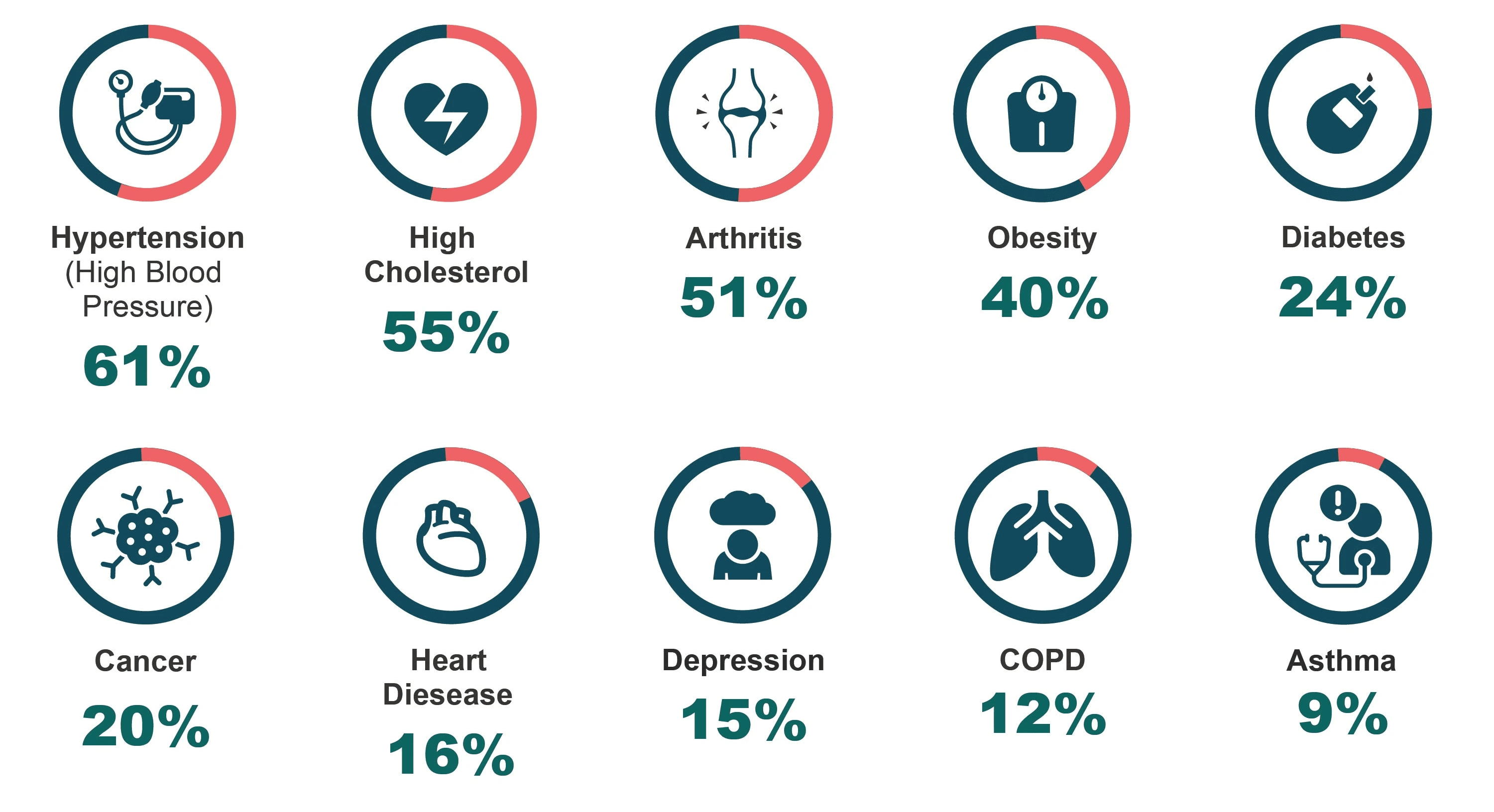
10 Common Chronic Conditions for Adults 65+
Research
Understanding the opportunity space
To better understand how older adults manage their health, we conducted in-person research at a senior center near USC, interviewing over 30 elderly participants about their daily routines, health habits, and challenges with existing tools.
We focused on how health data is currently collected and why existing methods fall short—especially for aging populations.
Key findings:
Urine is a powerful diagnostic signal. It can help detect and manage multiple chronic conditions, but is underutilized in everyday care.
Testing is infrequent and inconvenient. Most participants relied on occasional doctor visits, resulting in fragmented, point-in-time data.
Existing tools require effort, setup, or technical literacy. Many solutions depend on apps, manual input, or setup—creating barriers for older users.
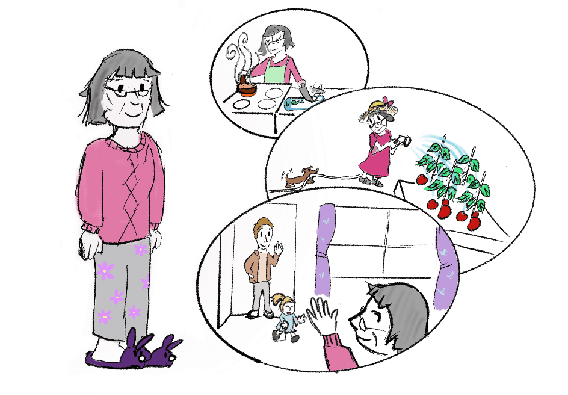
Persona
Why existing solutions fail
Current solutions ask too much from users.
Most health tools:

Key Insight
The best health monitoring system is invisible
For older adults, accessibility isn’t about simplifying interfaces—it’s about eliminating interaction entirely.
The less a user has to do, the more likely the system works.
Solution
Turning a daily routine into health data
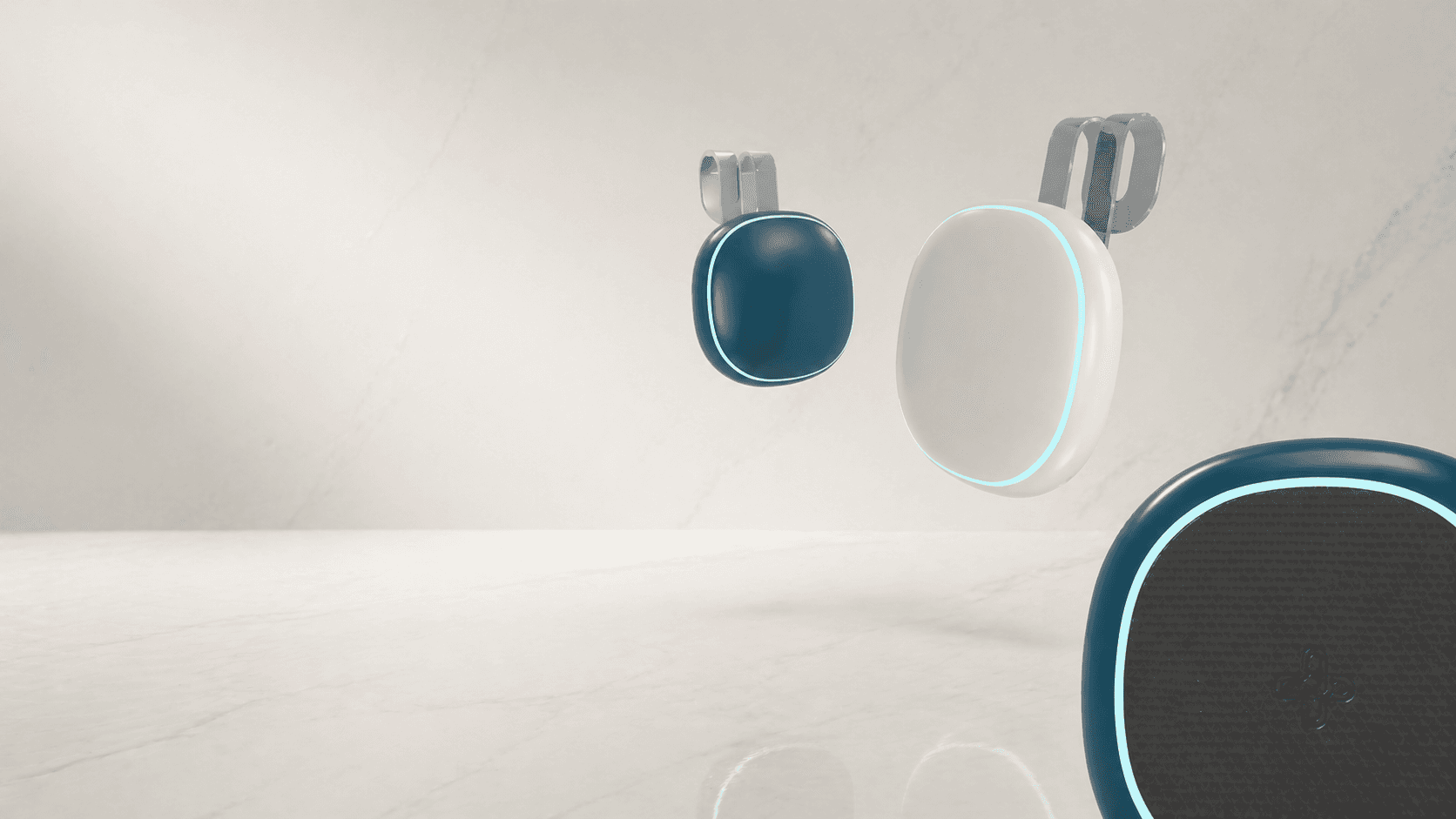
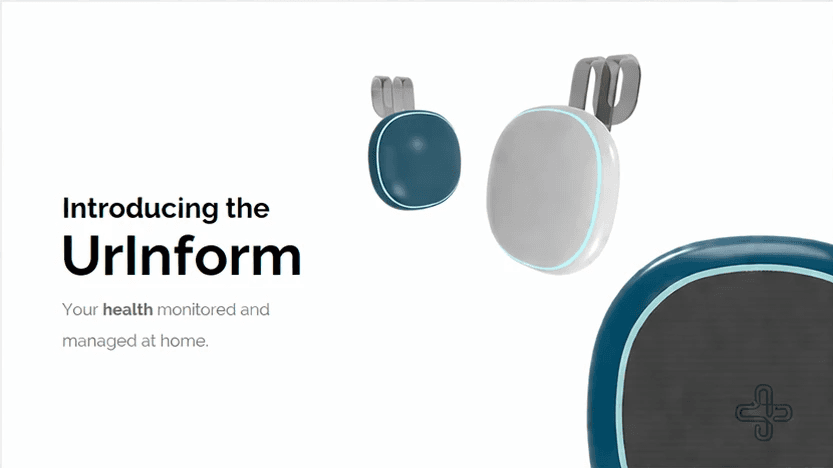
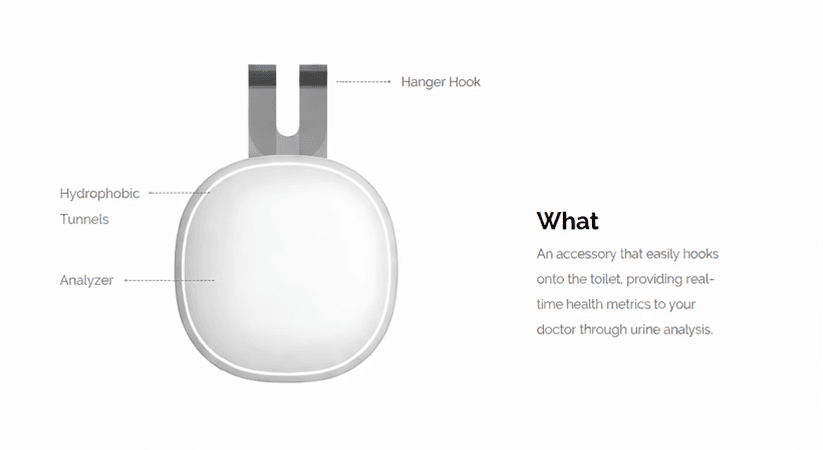
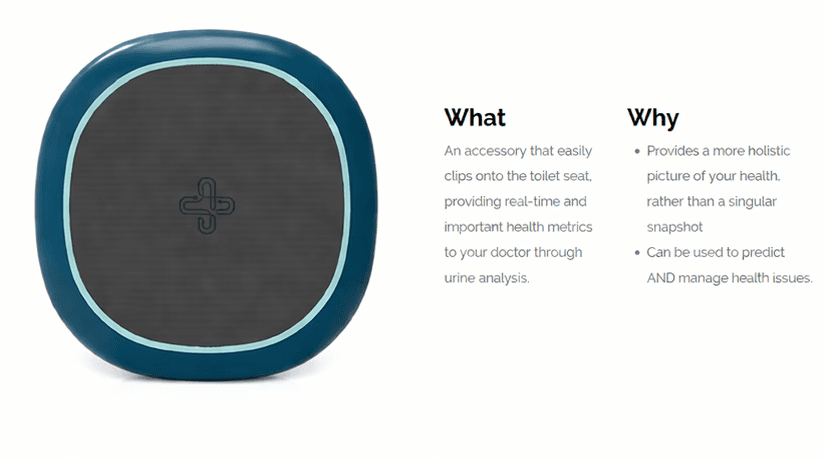
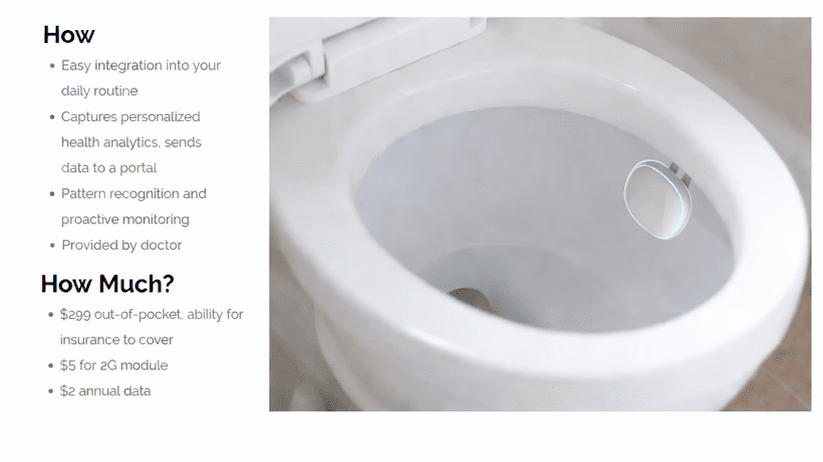
UrInform is a toilet-mounted device that passively analyzes urine during normal use and sends data to a shared health system.
No behavior change required.
How it works
User goes about their normal routine
UrInform collects and analyzes urine
Data is transmitted to a dashboard
AI detects patterns and flags risks
Insights support proactive care
System Thinking
Not just a device—a connected system
UrInform consists of:
Hardware (toilet-mounted sensor)
Data layer (continuous tracking)
Dashboard (provider + patient)
AI layer (pattern recognition)
Design principles:
Designed for accessibility at every level
Key decisions:
Zero interaction required
No app dependency
Integrated into existing behavior
Minimized cognitive load
Why this matters
From reactive care → proactive care
UrInform enables:
Earlier detection
Reduced hospital/clinic visits
Better patient independence
More informed provider decisions
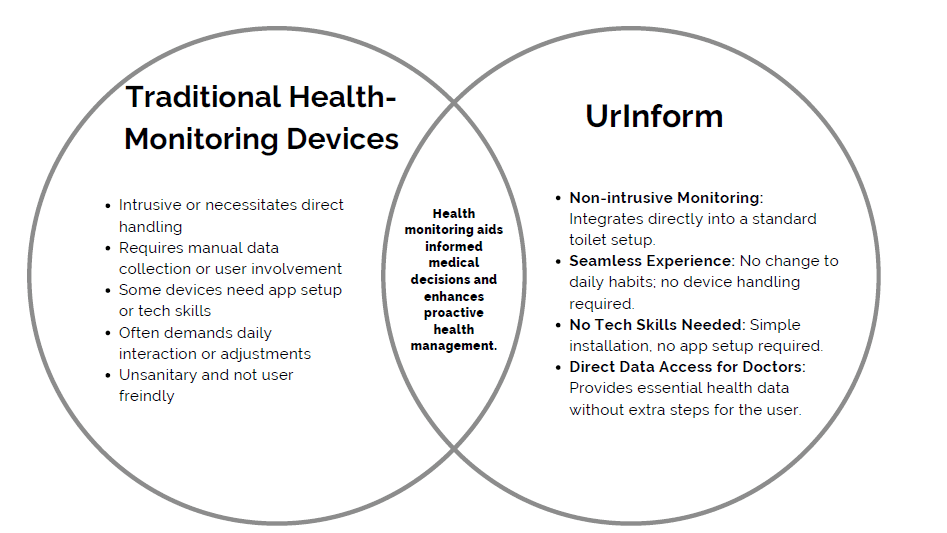
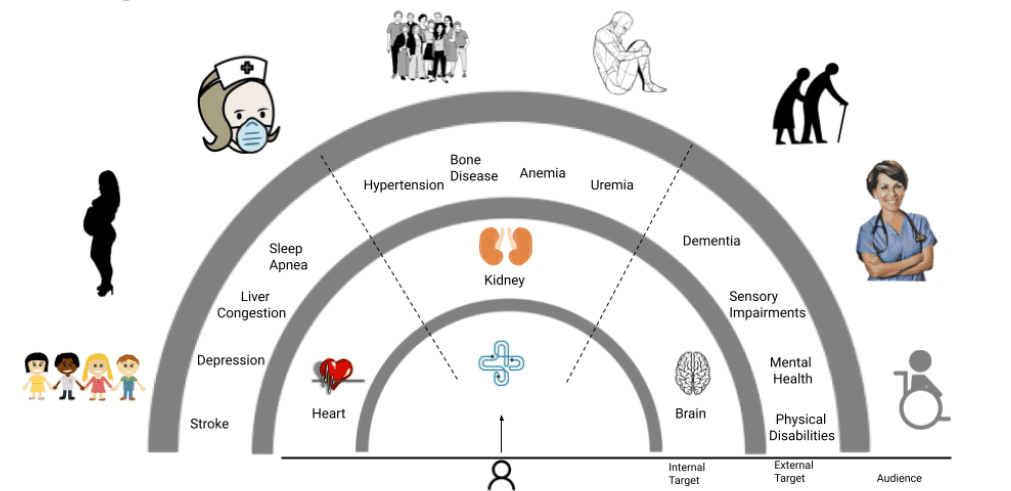
How it's unique
Target universalism

Reflection
What I learned:
This project reframed accessibility for me—not as simplifying interfaces, but as removing interaction altogether.
It was also deeply personal. I found myself thinking about my own parents throughout the process. I’ve always seen healthcare as essential—not just for treatment, but for helping the people we love live longer, healthier lives. And for me, that starts with early detection.
I wanted to design something that felt non-invasive and empowering—something that supports users without adding burden or taking control away from them.
I also had the privilege of working alongside five incredibly talented teammates. Each of us brought a unique perspective, and it was inspiring to collaborate and bring this idea to life—culminating in a presentation to the American Heart Association.
It also raised important questions about:
Ethics in health data
Trust in AI
Designing for vulnerable users